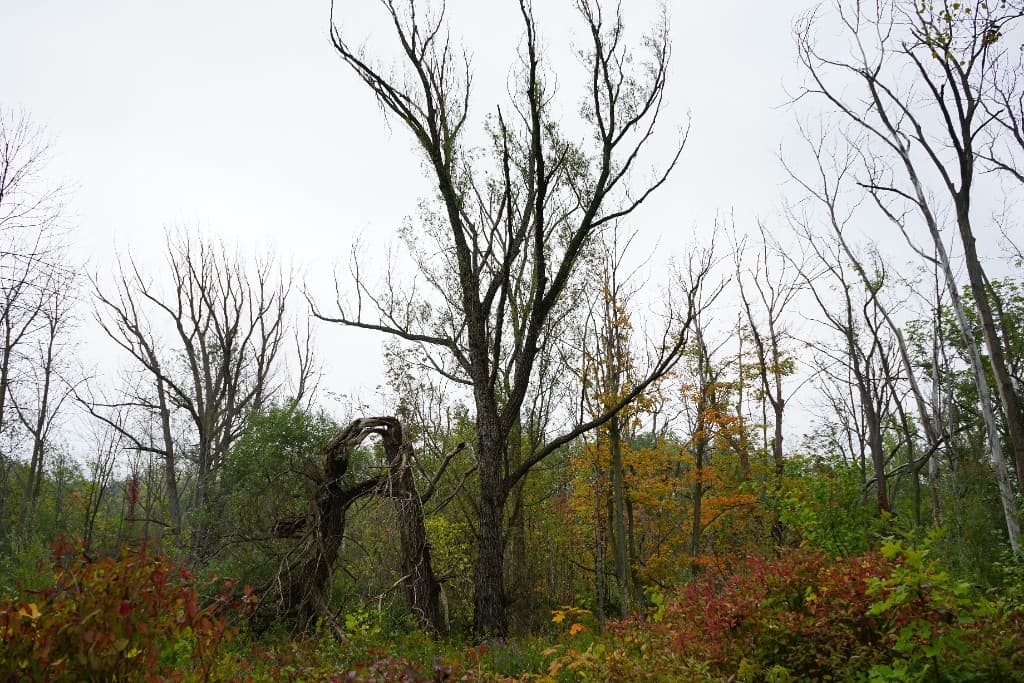
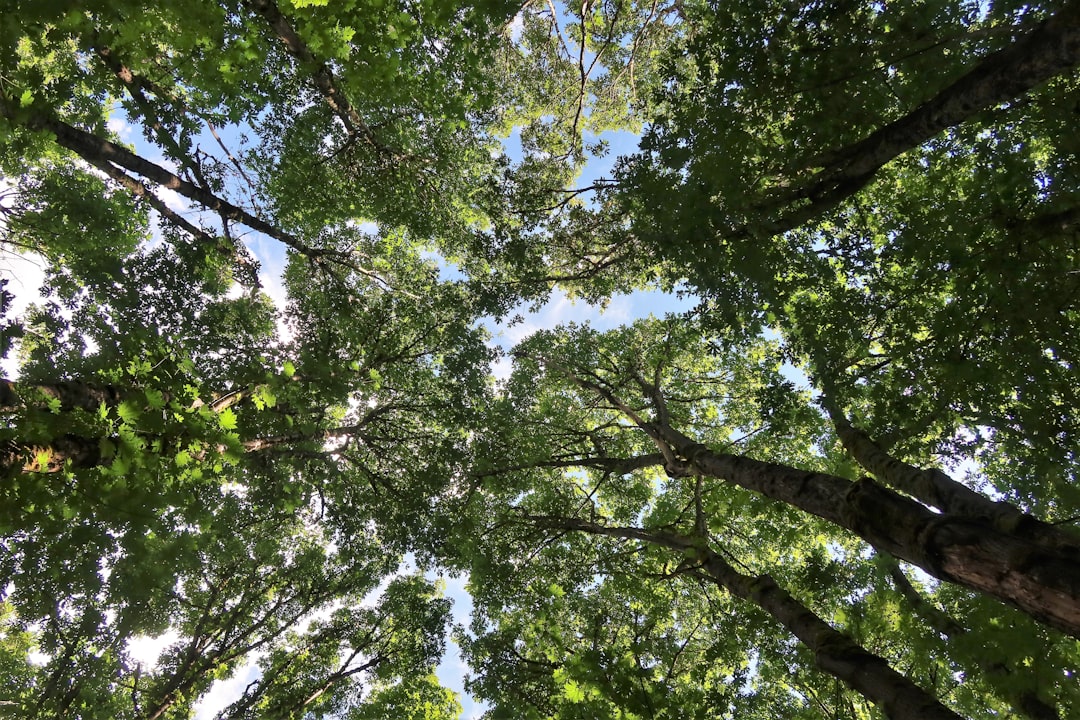
Guildwood was built around its trees.
When Rosa and Spencer Clark developed the neighbourhood in 1957, they enshrined a founding principle in the community's design: preserve the existing forest wherever possible. The result is one of Scarborough's most extraordinary neighbourhoods — winding streets, underground utilities, and mature canopy trees that tower over nearly every lot.
Those same trees, now 65–70 years old, are the neighbourhood's greatest asset. They are also, right now, its most urgent liability.
The Emerald Ash Borer is actively infecting Guildwood's ash population — and if you have an ash tree on your property, you need to act.
What Is the Emerald Ash Borer?
The Emerald Ash Borer (Agrilus planipennis) is a metallic green beetle native to Asia. It was first detected in North America in 2002 and reached Toronto in 2007. In the nearly two decades since, it has been infecting and greatly reducing the viability of the ash canopy across the city — confirmed losses now exceed 800,000 trees (City of Toronto Urban Forestry).
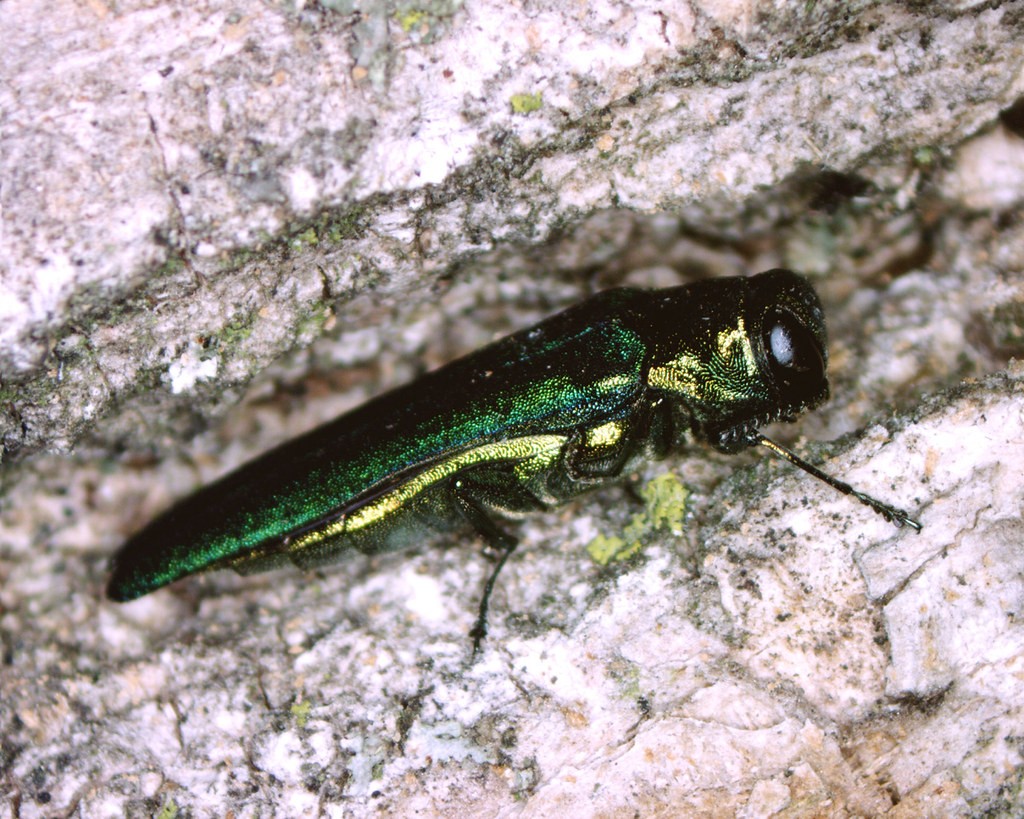
In Scarborough alone, estimates put the number of ash trees in active decline at 100,000+.
EAB is not like most tree pests. It infects efficiently, it spreads fast, and by the time visible symptoms appear on the outside of the tree, the subcortical damage is often already severe. The beetle targets all species of true ash (Fraxinus sp.) — white ash and green ash, the two most common mature ash species on Guildwood lots, are both primary targets.
The City of Toronto treats select City-owned boulevard trees with TreeAzin injections. Private property trees are entirely the homeowner's responsibility. The City does not fund or perform treatment on trees in your yard.
Why Guildwood Is Especially Vulnerable
Most ash trees in Guildwood were planted in the late 1950s and 1960s — they are now among the largest, most mature specimens in east Toronto. Large, old trees are both more valuable and more dangerous as infestation progresses.
Once EAB infection results in tree death, structural integrity declines quickly. Within 2–3 years of death, the wood desiccates and becomes extremely brittle — unpredictable under chainsaw cuts, prone to sudden branch failures, and hazardous for any arborist who attempts to climb it. Crane-assisted removal is frequently the only safe option for dead ash in Guildwood, which adds to the cost and complexity.
The neighbourhood's original design, which we now celebrate for its beauty, also means that many of these large trees are sandwiched between homes, in tight lots, or hanging over fences and driveways. There is no margin for error.
How to Tell If Your Ash Tree Is Infested
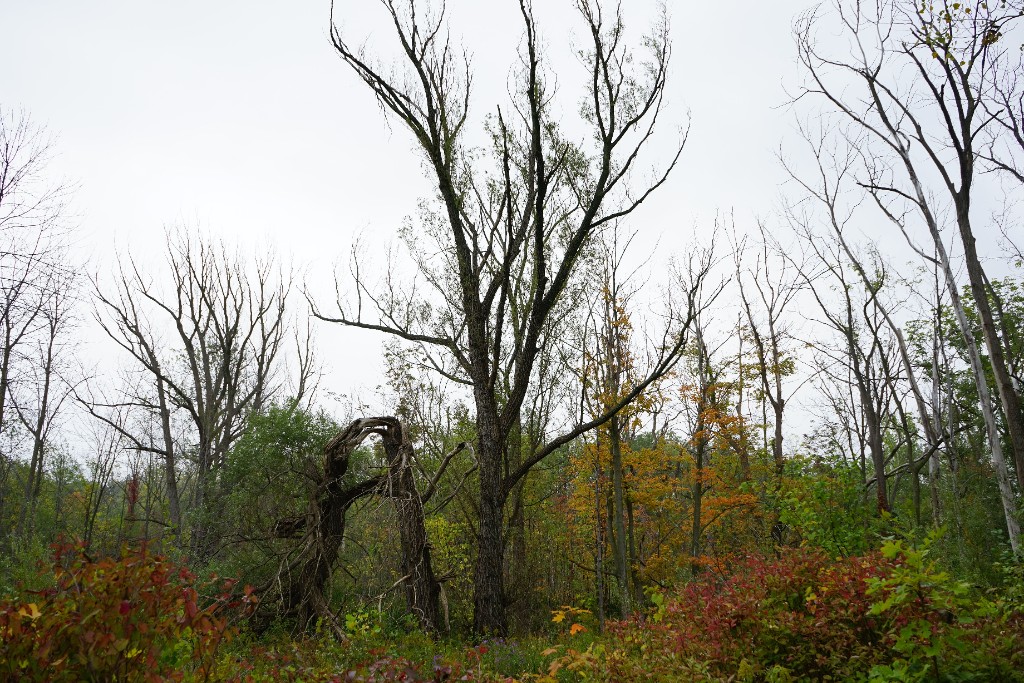
EAB often infects from the inside out. By the time you notice anything is wrong, the infestation may already be advanced. Here are the diagnostic signs to look for:
Early signs:
- Progressive crown dieback starting at the apex and advancing downward through the canopy
- Increased woodpecker activity — birds excavate bark to reach the larvae beneath
Clear infestation signs:
- D-shaped exit holes in the bark, about the size of a pencil eraser — the definitive diagnostic marker of adult beetle emergence
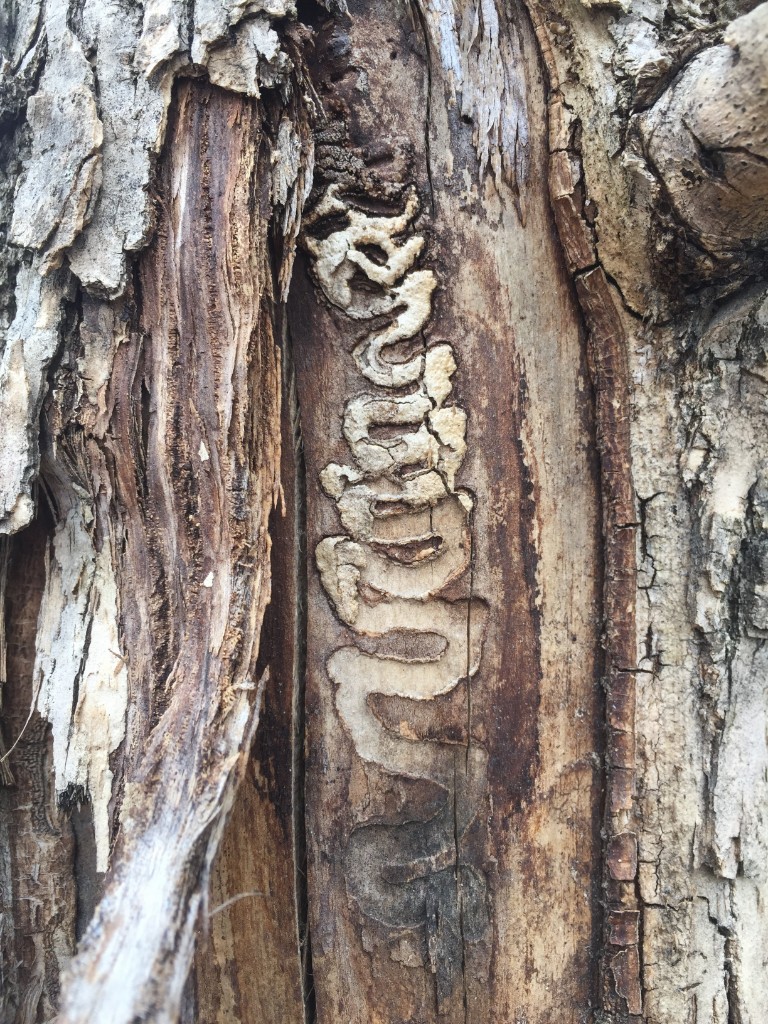
- Serpentine subcortical galleries visible when bark is peeled back (the feeding tunnels left by larvae as they destroy phloem and cambium tissue)
- Epicormic shoots — clusters of new growth sprouting directly from the trunk or major branches, a vascular stress response to progressive crown dieback
Late-stage / critical signs:
- More than 50% of the canopy appears dead or has failed
- Major branch failure throughout the crown
- Bark cracking and falling away from the trunk
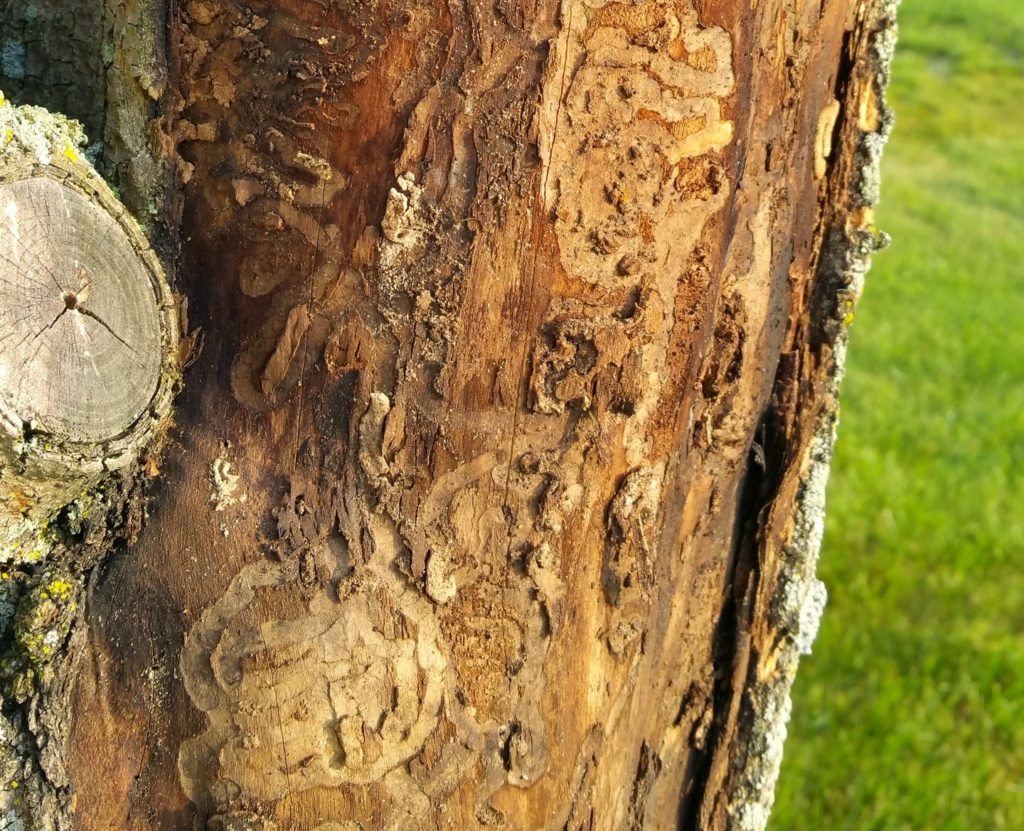
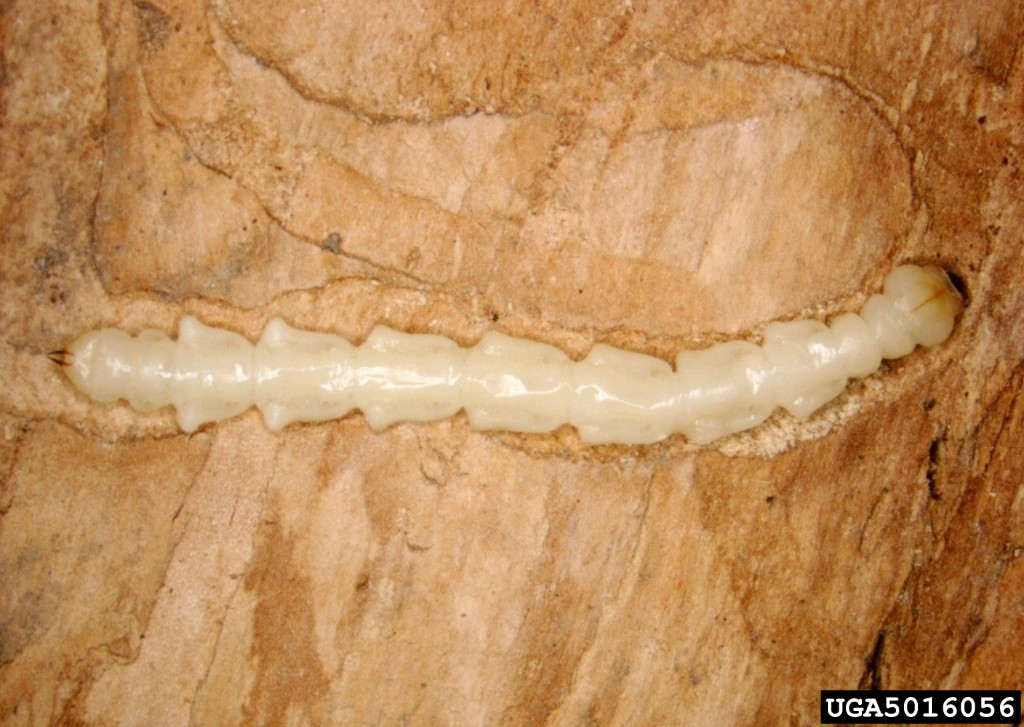
If you observe D-shaped exit holes or serpentine subcortical galleries, the tree is confirmed infested. Contact an ISA and Skilled Trades Ontario certified arborist immediately to assess how far phloem destruction has progressed and establish a structural prognosis.
Treatment vs. Removal: The Honest Decision
Here is the decision that every Guildwood homeowner with an ash tree needs to make — and we will give you the honest version.
TreeAzin Injection — Slowing the Infestation
If your ash tree has lost less than approximately 30–50% of its canopy, it may still be a candidate for treatment with TreeAzin — a biopesticide derived from neem tree seeds that is injected directly into the trunk. TreeAzin disrupts subcortical larval feeding and slows the progression of the infestation.
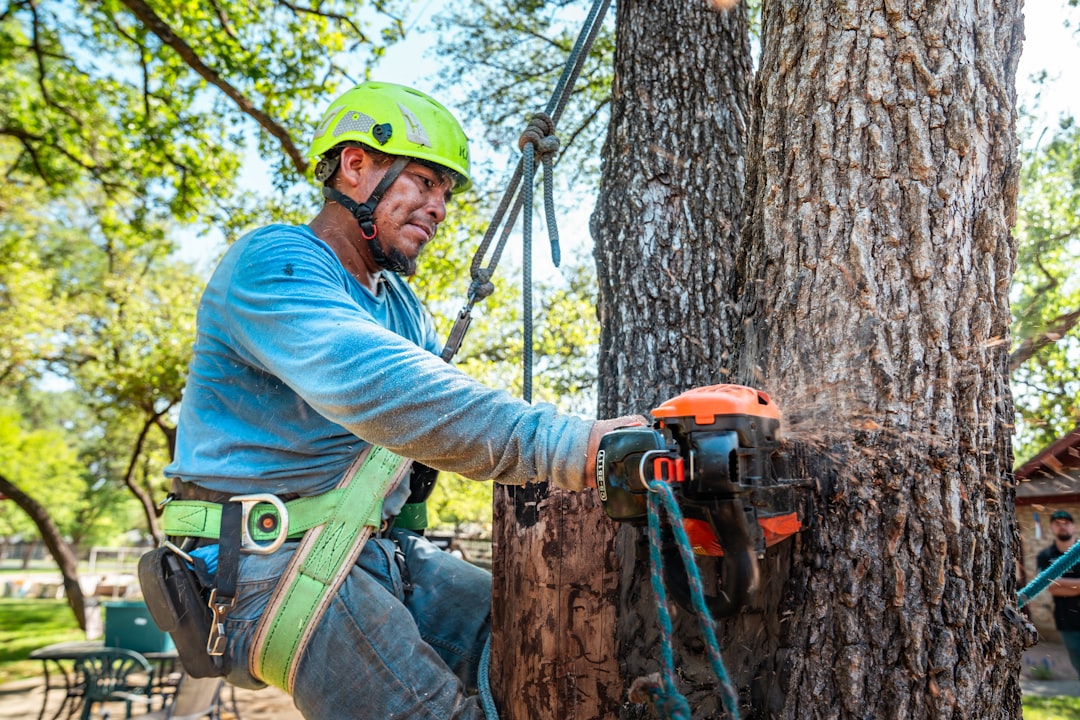
The critical point: TreeAzin cannot cure an infected tree. Injections only slow the infestation — they do not change the outcome. All infected ash trees will eventually succumb regardless of treatment. What injections buy is time — an extended infestation timeline that may be worth the investment depending on the tree's value to your property and your budget for ongoing treatment.
Key facts about TreeAzin treatment:
- Cost: approximately $200–$600 per treatment, depending on trunk diameter (some providers charge ~$8 per centimetre of diameter)
- Frequency: treatment must be repeated every 2 years — infestation progression resumes without ongoing intervention
- Candidacy threshold: trees past ~50% canopy loss are no longer viable treatment candidates
- Who can apply it: a licensed pesticide applicator, typically an ISA and Skilled Trades Ontario certified arborist
The City of Toronto treats its own boulevard trees on a 3-year injection rotation. This program does not extend to trees on private property.
Removal — When It Is the Only Safe Option
If your ash tree has lost more than 50% of its canopy, it has crossed the threshold of viable treatment candidacy. The structural prognosis is terminal. At that point, removal is not just the responsible choice — it is urgent.
Dead ash trees present three compounding problems that worsen every season they remain standing:
-
Structural compromise: Once dead, ash wood desiccates rapidly and becomes fragile and unpredictable. Branch failure can occur without warning. A tree that appeared manageable two years ago may now require crane-assisted removal because no arborist can safely climb it.
-
Liability: If a dead ash on your property fails and damages a neighbour's home or vehicle, you can be held liable — particularly if you had documentation of the hazard and failed to act. An ISA and Skilled Trades Ontario certified arborist's written assessment protects you.
-
Toronto permit requirements: You still need a permit to remove a dead ash tree in Guildwood if the trunk is 30 cm or more in diameter. Removing it without a permit — even an obviously dead hazard — exposes you to fines of up to $100,000 per tree.
The Permit Reality in Guildwood
This is where Guildwood gets complicated, and where many homeowners make costly mistakes.
Chapter 813 — The Private Tree Bylaw
Under Chapter 813 of the Toronto Municipal Code, a permit is required to remove any tree on private property with a trunk diameter of 30 cm or more (measured at 1.4 m above ground level). Given that Guildwood's trees were planted 65+ years ago, nearly every mature specimen qualifies.
What the permit process involves:
- An arborist report documenting the tree's condition and justification for removal
- A site plan showing the tree location and adjacent trees
- A replanting or landscape plan — replacement planting is mandatory as a permit condition
- Application submitted to the Scarborough District Urban Forestry office, Scarborough Civic Centre, 150 Borough Drive, 3rd Floor
- City has up to 30 business days to review a complete application
The fine for removing a regulated tree without a permit is up to $100,000 per tree.
Chapter 658 — The Ravine Bylaw
Guildwood sits along the Scarborough Bluffs. Many properties south of Guildwood Parkway have backyards that fall partially or fully within a designated ravine or natural feature area under Chapter 658 — the Ravine and Natural Feature Protection Bylaw.
Unlike Chapter 813, which is size-based, Chapter 658 protects every tree regardless of size or species within the protected zone. Removing a small ash sapling in a Chapter 658 area requires the same authorization as removing a large mature tree.
If your property is affected by Chapter 658, you need a separate Ravine and Natural Feature Permit application, which requires the ravine line delineation to be shown on your site plan.
Not sure whether Chapter 658 applies to your property? Our arborists know how to check — and we handle the application either way.
Beech Bark Disease: An Emerging Threat
While EAB dominates the conversation around Guildwood's canopy, a second pathogen complex is infecting a different species — and it is already showing up on Guildwood properties.
Beech Bark Disease (BBD) is caused by a two-stage process: the beech scale insect (Cryptococcus fagisuga) colonizes the bark and opens entry wounds that allow Neonectria fungal pathogens to infect the phloem and cambium tissue beneath. The result is progressive sunken cankers, localized phloem destruction, and crown dieback that reduces the structural viability of the tree over time.
BBD progresses more slowly than EAB, but the outcome for heavily infected trees is similarly terminal. The key difference is early intervention: trees identified at the scale colonization stage — before significant phloem damage has occurred — have better management options and a more favourable structural prognosis than trees diagnosed with established cankers.
Signs of Beech Bark Disease to watch for:
- White woolly or waxy patches on the bark (beech scale insect colonies)
- Sunken, dark, or bleeding cankers in the bark
- Crown dieback starting at the branch tips and advancing inward
- Yellowing or off-season leaf drop in isolated crown sections
If you have an American beech on your Guildwood property, our arborists can assess it as part of a plant health care visit.
What UTS Does for Guildwood Homeowners
We have been serving east Scarborough — including Guildwood — from our Ajax base for years. Here is exactly what we do on every Guildwood ash or beech tree job:
-
Free on-site assessment. We evaluate the tree, determine the percentage of canopy loss, look for D-shaped exit holes and serpentine subcortical galleries (for EAB) or scale colonies and cankers (for BBD), and give you an honest recommendation — treatment or removal, with a clear structural prognosis.
-
TreeAzin candidacy evaluation. If the tree qualifies for treatment, we advise you on the realistic infestation timeline, the probability of extended viability, and the ongoing cost of a 2-year injection program.
-
Toronto permit application preparation. For removal, we prepare the arborist report, site plan, and replanting plan. We submit to the Scarborough Civic Centre and follow up with the Scarborough District Urban Forestry office. You don't navigate this alone.
-
Removal using the right technique. For dead or advanced-infestation ash trees, we use crane-assisted or rigged sectional removal — the only safe approach for structurally compromised wood in tight Guildwood lots. No shortcuts.
-
Cleanup and replanting advice. We leave the property clean and advise on replacement species appropriate for your lot and soil.
The Bottom Line
Every ash tree you see standing in Guildwood today is either already infected, in active decline, or living on borrowed time under an injection program. The question is not whether your ash is at risk — it is where it sits on the infestation timeline, and whether you act before it crosses the candidacy threshold for treatment.
Dead ash trees that could have been managed two or three seasons earlier are now crane jobs. Trees that were crane jobs two seasons ago are now safety emergencies. Every season you wait costs more and carries more risk.
Call us at (289) 200-8441 or get a free quote online. We will come to your Guildwood property, assess your ash and beech trees honestly, and tell you exactly what they need — whether that's a $400 injection, a crane-assisted removal with a permit we file for you, or a watch-and-monitor plan.
Unparalleled Tree Service is ISA and Skilled Trades Ontario certified, fully insured, and based in Ajax — 15 minutes from Guildwood via Kingston Road. See our full Guildwood service page or contact us with any questions.