
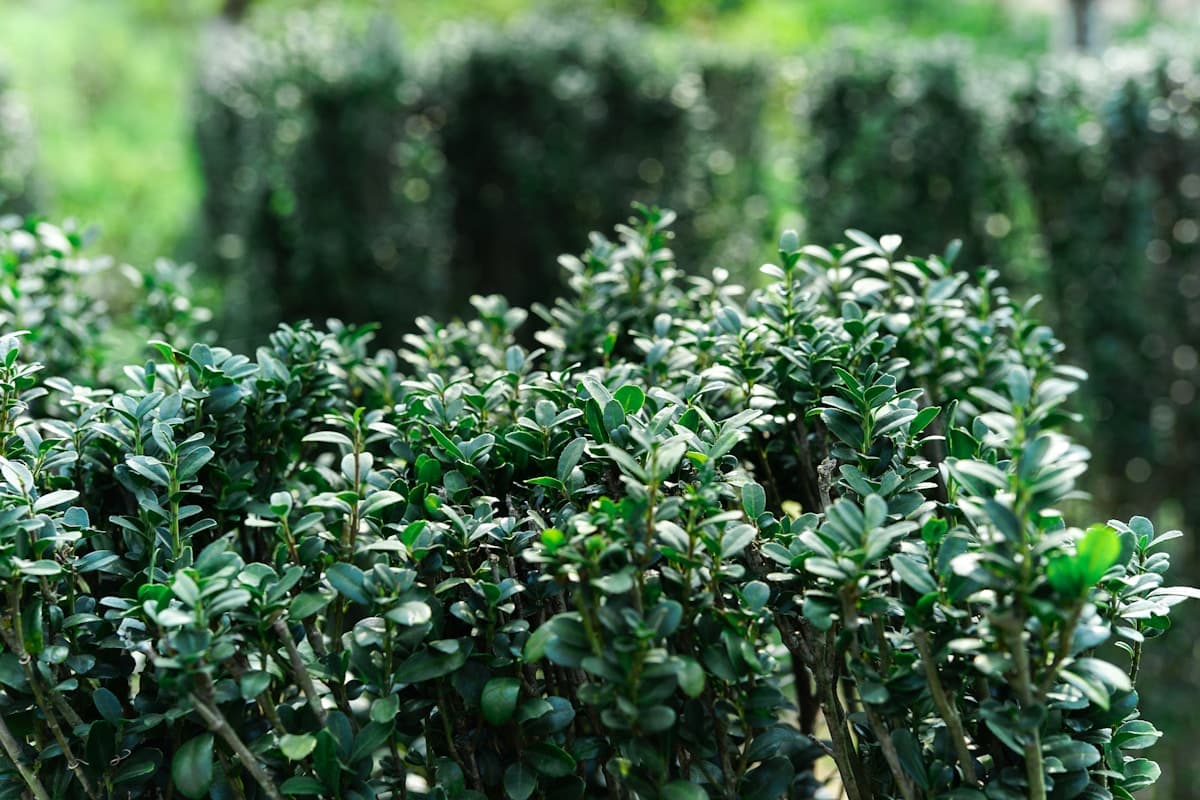
If you've been watching your boxwoods deteriorate and wondering why your BTK spray isn't doing anything — you're not alone. This is one of the most common misdiagnoses we're seeing across Scarborough and the GTA right now. The damage looks similar. The timing overlaps. But BTK and boxwood leafminer have nothing to do with each other, and spraying the wrong thing means your boxwoods keep getting destroyed while you keep buying product that isn't solving the problem.
Here's what's actually going on.
Two Different Pests, Two Very Different Treatments
Box Tree Moth
Box tree moth (Cydalima perspectalis) arrived in Etobicoke in 2018 and has since spread throughout the GTA, including Scarborough. It's a real problem — larvae defoliate boxwoods aggressively, three times a year, and can kill plants that were completely healthy the previous season.
BTK works on box tree moth. The moth is a caterpillar (Lepidoptera), and BTK — Bacillus thuringiensis var. kurstaki — kills caterpillar larvae when they eat treated foliage. Applied during the right larval windows, it's an effective tool:
- May 15 – June 15
- July 15 – August 15
- September 1 – 20
For the spring window, my rule of thumb: spray in the first week of mid-May (around May 15) and again at the end of May. Two applications across that window gives you consistent coverage as larvae hatch and start feeding — a single spray is easy to miss if emergence is staggered.
Miss those windows entirely, or apply when larvae aren't actively feeding, and you get nothing. But at least you're treating the right pest.
Boxwood Leafminer
Boxwood leafminer (Monarthropalpus flavus) is a midge — a small fly. Not a moth. Not a caterpillar. The larvae live inside the leaf tissue, mining between the upper and lower leaf surfaces.
BTK does absolutely nothing against leafminer. It's not a caterpillar, so the mechanism doesn't apply. Spraying BTK at a leafminer infestation is the same as treating a fungal disease with an insecticide — it just doesn't work.
We're seeing a lot of this right now. Someone notices their boxwoods look bad, assumes it's box tree moth (which gets all the press), grabs BTK, sprays it, and then wonders why nothing changed.
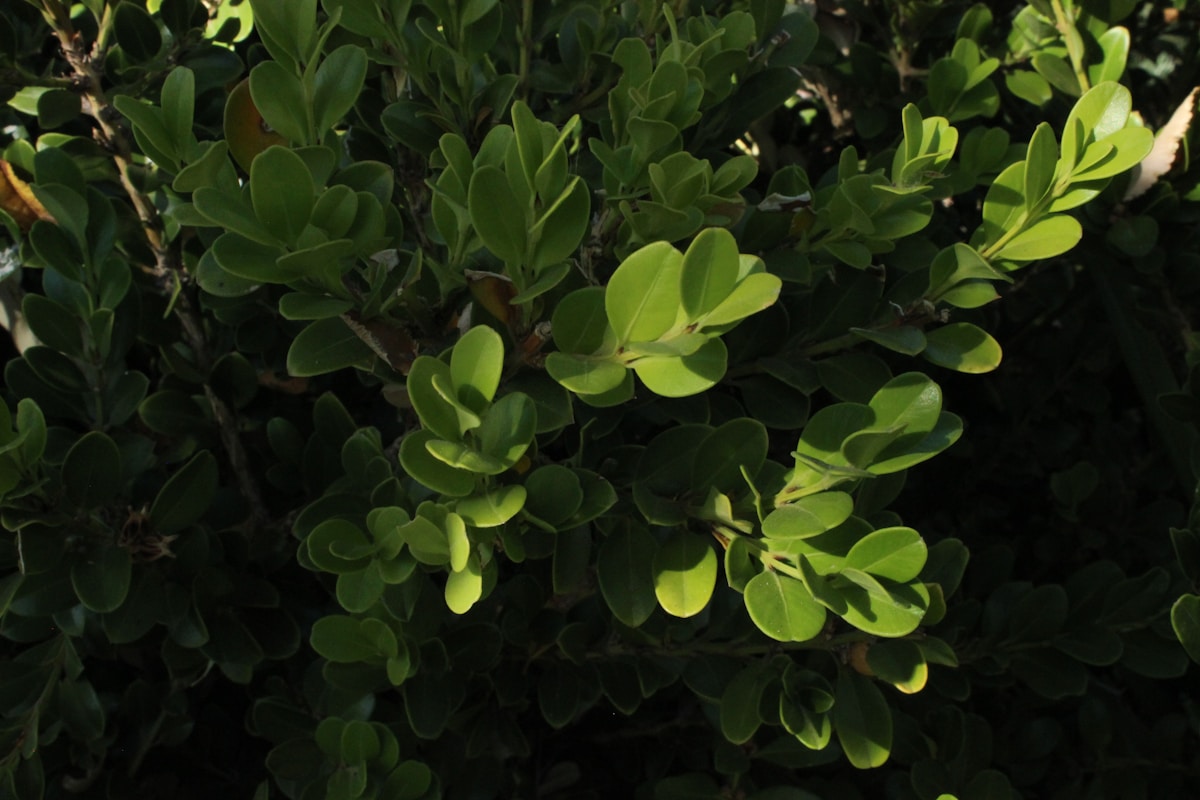 Early leafminer damage: cupped, blistered, thickened leaves. Photo: Zoe Denney-Goodyer / Unsplash
How to Tell the Difference
The damage patterns are different once you know what to look for.
Box tree moth signs:
- Webbing inside the plant
- Visible green caterpillars with black heads
- Leaves eaten from the outside — skeletonized or stripped entirely
- Frass (droppings) on leaves and soil
Boxwood leafminer signs:
- Leaves that are cupped, blistered, or swollen — especially on the underside
- Thickened, leathery leaf texture
- No webbing, no caterpillars
The swipe test: Run your hand across the top of the affected boxwood in late spring. If a cloud of small, orange gnat-like flies lifts off — that's the adult leafminer. Adults emerge around late April to early May, mate, and lay eggs directly into leaf tissue. What you're seeing later in the season is the larvae mining inside those leaves.
If you don't see the flies but the leaves look blistered and thickened — check the undersides closely. The mines are visible as discoloured, translucent patches when you hold a leaf up to the light.
What Actually Works on Leafminer
Because the larvae are protected inside the leaf, you need to hit the pest at multiple life cycle stages to get real control. We call this the three-layer approach — and it's the same principle behind every Plant Health Care program we build: minimum effective treatment, applied at the right time, targeting the confirmed problem.
1. Early season — horticultural oil Apply a dormant or early-season horticultural oil before bud break, when eggs are overwintering in leaf tissue. This is your best preventive shot. Apply on a calm day with no wind so the oil penetrates rather than drifting — coverage matters more than volume.
2. Adult emergence — pyrethrin When adults emerge (late April to early May), a pyrethrin-based spray knocks down the adult population before they can lay the next generation of eggs. Timing is everything here — a week either side and you miss the window.
3. Active larvae — insecticidal soap + soil drench Insecticidal soap addresses larvae on contact. Combined with a pyrethrin-active soil drench, you're hitting the pest at the leaf surface and in the soil where adults pupate. This is the follow-through layer.
Hit all three stages and you break the cycle. Miss one and you manage it without solving it.
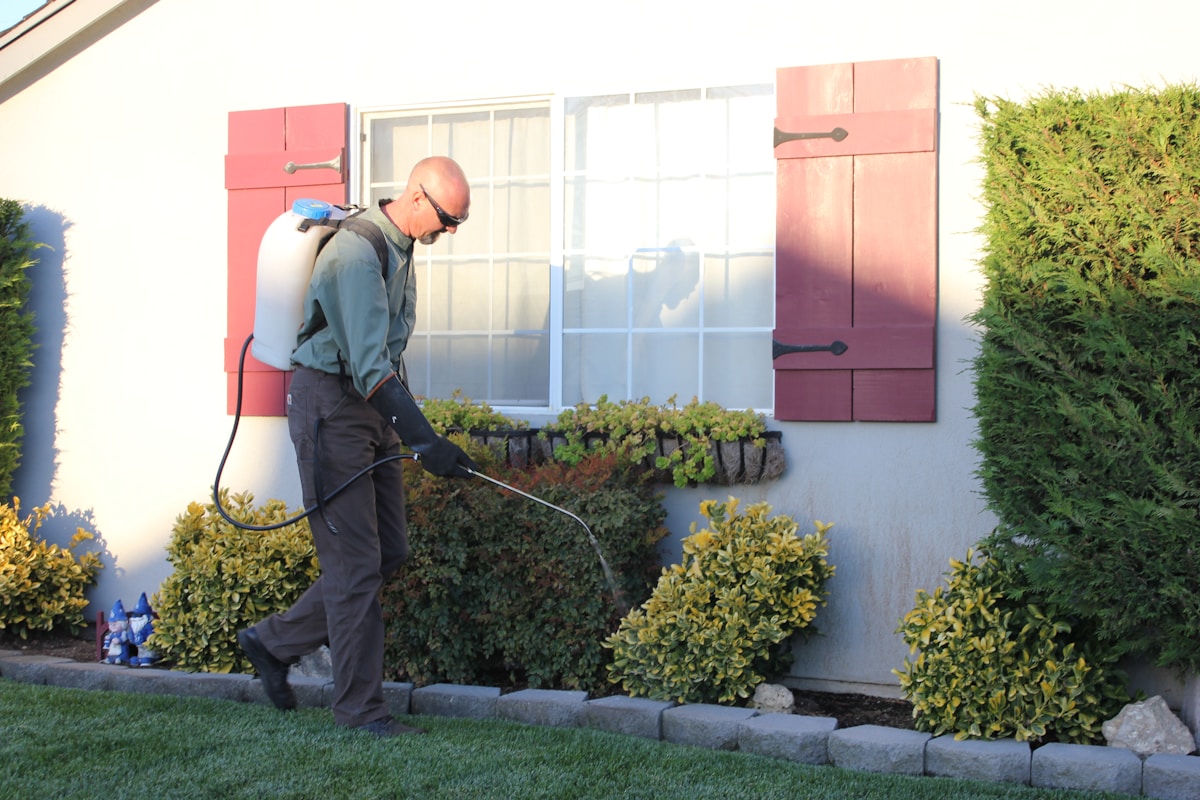 Correct diagnosis before treatment is what separates plant health care from guesswork. Photo: Pro Pest Control Canberra / Unsplash
When Blight Is Also in the Mix
Boxwood blight (Calonectria pseudonaviculata) is a fungal disease — a separate problem entirely from both box tree moth and leafminer. Brown patches, black streaking on stems, and rapid defoliation are the tell-tale signs. Boxwood blight has been documented in Ontario nurseries since 2012 and tends to spread fast in dense, poorly-ventilated plantings.
BTK doesn't touch it. Leafminer treatment doesn't touch it. Blight requires a fungicide, and many of the copper-based products that work well in other markets aren't registered for use in Canada — which limits options significantly. If you're seeing what looks like blight alongside pest damage, get a proper assessment. Treating for the wrong thing while blight progresses unchecked is how you lose the plant entirely.
The Bigger Point
This is exactly why we diagnose before we prescribe. A boxwood in rough shape can be suffering from box tree moth, leafminer, blight, drought stress, or some combination of all of them — and each one has a different treatment protocol. Blanket spraying doesn't work because there is no blanket solution.
If your boxwoods have been declining despite treatment, the most likely explanation is that the wrong pest is being targeted. A Plant Health Care assessment gives you a confirmed diagnosis and a targeted plan — not a guess. That's what actually saves the plant.
Boxwoods looking rough and you're not sure what's going on? Get a free assessment and we'll tell you exactly what you're dealing with — and what it'll take to fix it.