
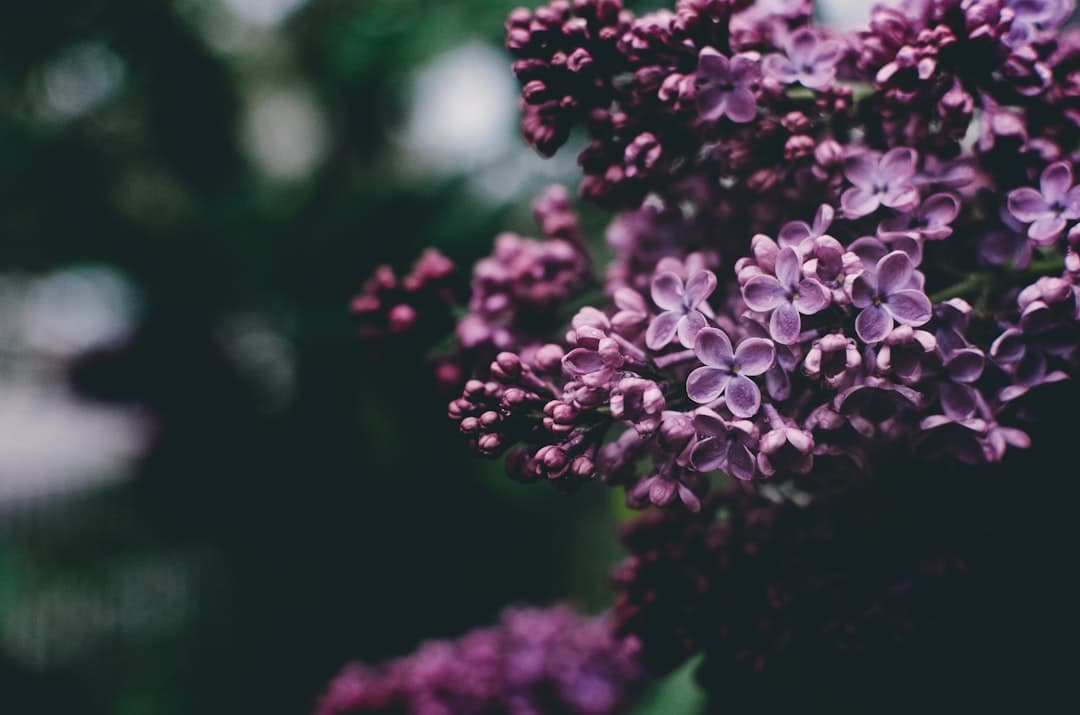
The lilac by the side of the house looks like it got dusted with icing sugar. So does the ninebark. Maybe the lower leaves of a maple, or a young oak in the back corner.
The reflex is to go buy something and spray it. Resist that for ten minutes and read this first, because powdery mildew is the single most overtreated plant disease I encounter, and in most cases the correct professional recommendation is to do very little.
What You're Actually Looking At
Powdery mildew isn't one disease. It's a whole family of related fungi — the Erysiphaceae — and they all produce the same signature: a white to grey powdery or felt-like coating on leaves, green shoots, and sometimes buds. It's usually worst on the youngest, most tender growth.
The most useful thing to know about it is structural. Most fungal leaf diseases grow into the leaf and kill the tissue, which is why anthracnose leaves dead papery lesions. Powdery mildew mostly stays on the surface, sending feeding structures just into the outer cell layer. That's why you can rub it off with your thumb, and it's also why it does far less damage than its appearance suggests. It's shading the leaf and skimming some sugar off the top, not destroying it.
It's also host-specific, and this surprises everybody. The powdery mildew on your lilac is a different fungus from the one on your phlox, and it cannot jump between them. A mildew will move among closely related plants, though — the one that infects oaks, for example, can also infect rhododendrons and dogwoods. So when you see white coating on four different plants in your yard, you're usually not watching one outbreak spread. You're watching four separate fungi all enjoying the same weather.
Why It Shows Up in Late August Specifically
Most fungal diseases need free water sitting on a leaf to get started. Powdery mildew doesn't. High humidity alone is enough for its spores to germinate, which is what makes it different, and what makes it an August problem here rather than a spring one.
Its ideal conditions are warm days followed by cool, humid nights — which is a fairly precise description of southern Ontario from mid-July through September. Add a plant tucked into a sheltered spot with poor air movement, up against a fence or a wall where the humidity sits, and you've built the perfect habitat. That's exactly why it's always the same lilac in the same corner, year after year.
The Honest Assessment: It's Cosmetic
On an established tree or shrub, powdery mildew does not cause significant harm. It doesn't kill the plant. Your lilac will bloom next spring. Most mature plants in this region live with it indefinitely and nobody notices but the owner.
In severe, repeated cases it can reduce growth and flowering, and it genuinely detracts from the look of ornamentals where appearance is the entire point — roses, purple-leaved ninebark, a specimen lilac by the front door. But "this looks bad" and "this is hurting my plant" are different problems with different answers, and conflating them is how people end up spending money every August forever.
Why I Usually Can't Prescribe a Spray — and Wouldn't
Here's something most homeowners in Ontario have never had explained to them.
Under Ontario Regulation 63/09, conventional pesticides can't be used for cosmetic purposes on lawns and gardens. There's a specific exception for trees, but it has a condition: a licensed applicator can only use one if a professional — an ISA Certified Arborist, a registered forester, or a qualified utility arborist — first signs a written opinion stating the treatment is necessary to maintain the health of that tree. The regulation requires that we apply integrated pest management principles in making that call, and that we refuse to provide the opinion when the treatment isn't necessary.
For powdery mildew on a healthy established plant, it isn't necessary. So I can't write it, and I wouldn't want to. What remains available for cosmetic situations are the genuinely low-risk products — insecticidal soaps, horticultural oils, copper sprays and similar biopesticides — which homeowners can buy and use without any opinion from me.
I'm spelling this out because "the pesticide ban means nothing can be done" and "spray it with whatever's on the shelf" are both wrong, and the truth sits in between. When a pest is actually threatening a tree's life, the treatment pathway exists and we use it — that's how EAB treatment works. When it's a cosmetic fungus on a healthy lilac, the law and good practice agree with each other.
What Actually Helps
Every one of these is cheaper than a spray program and works better over time.
Open up the air. Powdery mildew needs still, humid air. Thinning crowded interior stems on a shrub, or a proper crown thinning on a dense tree, lets air move and moisture leave. Norway maples are notorious for growing dense enough to trap humidity inside the canopy all day — thinning one is the single most effective thing you can do for a chronically mildewed maple, and it improves the tree's structure at the same time.
Time it right, though. Prune shrubs after they bloom, and do structural work on trees in the dormant season. Cutting into a plant now stimulates a flush of soft new shoots, and soft new growth is exactly what powdery mildew colonizes best. Heavy pruning during an active infection makes next month worse.
Water at the base, in the morning. A soaker hose at the root zone rather than a sprinkler over the foliage. Morning rather than evening, so anything that does get wet dries in daylight instead of sitting damp all night.
Stop fertilizing. This is the one people get backwards. A struggling plant looks like it needs feeding, but nitrogen produces lush, succulent growth that is far more susceptible to infection. Don't fertilize an infected plant unless a soil test says you're correcting a real deficiency. If your soil genuinely needs work, root zone treatment based on evidence, in the right season, is a different thing entirely from throwing fertilizer at a sick-looking shrub in August.
Bin the debris — don't compost it. Pick off badly infected leaves as you see them, cut back affected perennial foliage in late summer, and send it out with municipal yard waste. A backyard compost pile usually doesn't get hot enough to kill fungal spores reliably, so composting infected leaves at home just parks the inoculum a few feet from the plant it came off.
If you do choose to treat, treat early and expect to repeat. Products like potassium bicarbonate, neem oil, sulfur, and Bacillus-based biofungicides work as protectants on healthy tissue, applied at the very first sign of infection and reapplied on label intervals. None of them will clean up a plant that's already fully coated — by late August, on a plant that's already white, you've missed the window for the year.
Then plant smarter next time. Resistance varies enormously by cultivar, and it's free to choose well at the nursery. Among lilacs, 'Donald Wyman' and 'Palibin' are notably more mildew-resistant than the common varieties most people buy. Resistant cultivars exist for roses, ninebark, phlox, bee balm, and crabapple too. If a plant in a bad spot has disappointed you three summers running, replacing it with a resistant cultivar beats treating the wrong plant forever — and it's worth a conversation when you're planning new plantings.
When It Does Deserve Attention
Call somebody if:
- It's a young or newly planted tree or shrub, which has no reserves to spare and a proportionally larger share of its leaf area affected
- The plant is defoliating heavily because of it, several years running
- It's stacked on top of another problem — drought stress, root damage, a recent transplant, or another disease. Mildew alone is minor; mildew as the fourth thing on a struggling plant's list is worth including in an overall assessment
- The decline is lopsided, with one side of a tree failing and the other fine. That isn't a mildew pattern, and it points somewhere more serious like Verticillium wilt
Otherwise, this is genuinely a "leave it alone" disease. I know that's an unsatisfying answer when your lilac looks terrible, but the preservation-first approach cuts both ways: it means recommending treatment when a tree needs it, and telling you to keep your wallet closed when it doesn't.
Want a second opinion before you spend anything? Book a free assessment — we serve Ajax, Whitby, Pickering, and all of Durham Region, and "this is cosmetic, don't treat it" is a perfectly normal outcome of one of our visits.